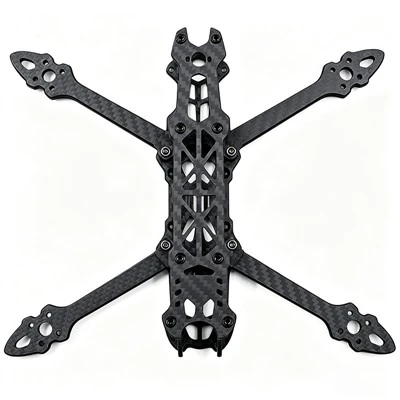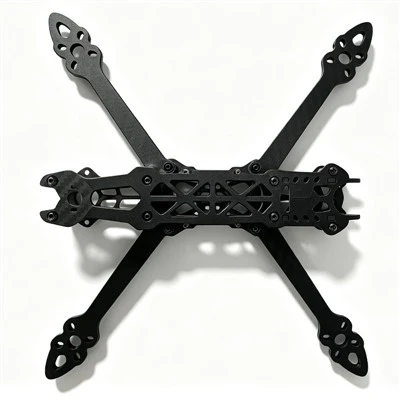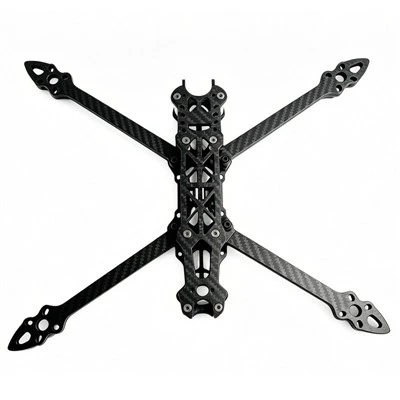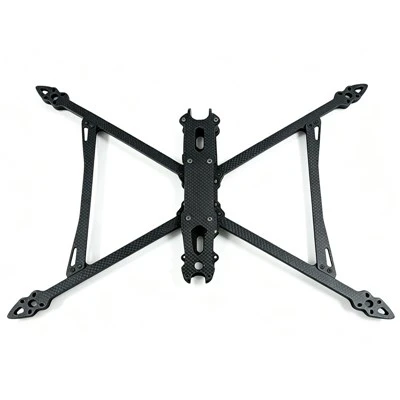
Carbon fiber can form composite materials with various materials such as resins, plastics, ceramics, glass, and metals. Carbon fiber composites are characterized by high strength, light weight, good rigidity, and good fatigue resistance. They are mainly used as weight-reducing structural materials and for ablation heat dissipation.
Carbon Fiber Reinforced Resin Matrix Composites
Carbon fiber reinforced resin matrix composites (CFRP) have low density and higher specific strength and specific modulus than fiberglass. Their specific strength is 5-6 times that of high-strength steel and titanium alloys, twice that of fiberglass, and their specific modulus is 3-4 times that of these materials. Therefore, CFRP is used as a main structural material in the aerospace industry. For example, the Space Shuttle's payload doors, ailerons, vertical tail, main landing gear doors, and internal pressure vessels all use CFRP, resulting in a weight reduction of up to 2 tons for the Space Shuttle.
Carbon/Carbon Composites
Carbon/carbon composites (C/C) are carbon-based composite materials reinforced with carbon fibers and their products (carbon felt, carbon cloth, etc.). Carbon fiber (C/C) is composed of only one element-carbon-and possesses the advantages unique to carbon and graphite materials, such as low density and excellent thermal properties, including ablation resistance, thermal shock resistance, high thermal conductivity, and a low coefficient of thermal expansion. It also exhibits the high strength and high modulus of composite materials. Another important property of C/C is its excellent tribological properties. C/C also has good biocompatibility with the human body.
Carbon Fiber Reinforced Metal Matrix Composites
Carbon fiber reinforced metal matrix composites (CFRMs) possess a series of excellent properties, including high specific strength, high specific modulus, high temperature resistance, low coefficient of thermal expansion, high thermal conductivity, and strong resistance to thermal deformation. Carbon fiber reinforced aluminum not only has higher strength than aluminum alloys but also offers a significantly higher service temperature, retaining approximately 90% of its tensile strength even at around 500K. Fiber-reinforced aluminum exhibits excellent fatigue strength, retaining 63%–84% of its fatigue strength even after 10 fatigue cycles.
Carbon Fiber Reinforced Ceramic Matrix Composites
The fatal weakness of ceramics is their brittleness. Reinforcing ceramics with carbon fiber effectively improves toughness, alters the fracture morphology, and increases toughness. The fibers also prevent rapid crack propagation. Fiber-reinforced ceramic matrix composites exhibit higher strength, improved mechanical and thermal shock properties, and significantly enhanced fracture toughness. Compared to ordinary ceramics, their flexural strength is increased by approximately five times, and their fracture toughness by hundreds of times.
Carbon Fiber Reinforced Rubber Composites
Under the same bending conditions, carbon fiber reinforced rubber composites show a significantly longer service life compared to ordinary rubber. The thermal conductivity of rubber is two orders of magnitude lower than that of carbon fiber. When rubber is reinforced with fibers, the carbon fibers form a heat transfer network within the composite, allowing frictional heat to dissipate and thus improving thermal properties, particularly thermal fatigue resistance.