In my years working directly with FPV brand owners, wholesale distributors, and industrial drone teams, I have noticed one universal truth: your reputation in the FPV market is only as strong as your hardware's weakest link.
When a freestyle pilot clips a concrete gate at 90 mph, or a commercial cine-lifter carries a $15,000 cinema camera over water, there is zero margin for manufacturing shortcuts. Yet, many buyers sourcing FPV drones and accessories still struggle with inconsistent tolerances, delayed lead times, and high DOA (Dead on Arrival) rates from middlemen who never step foot on a production floor.
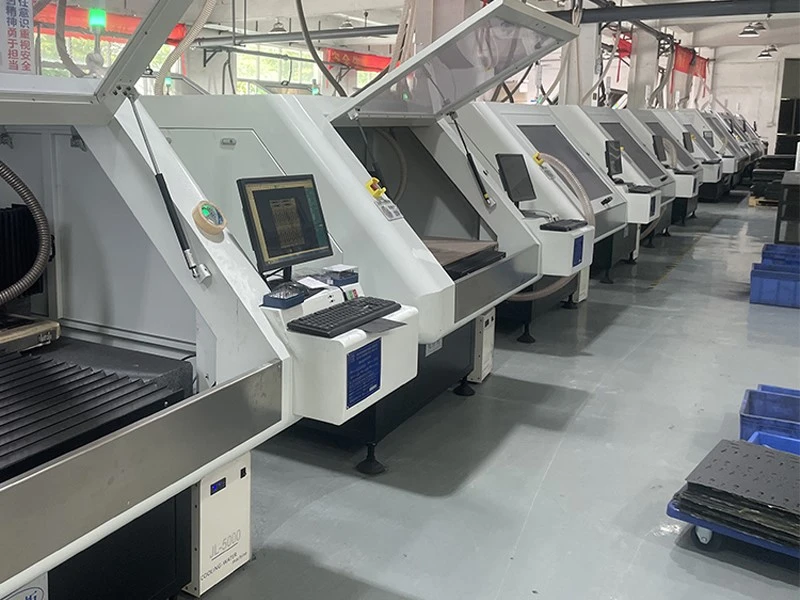
As a senior sales expert of FPV drones, my job isn't just taking orders-it's translating your technical requirements to our engineering floor and ensuring every batch ships on spec. Today, I want to pull back the curtain and show you how we actually build high-precision FPV frames, electronics, and accessories inside our facility.
1. Material Sourcing: It Starts Before the Machines Turn On
You cannot CNC-machine your way out of poor raw materials. One of the first questions experienced buyers ask me is how we verify our carbon fiber and electronic components.
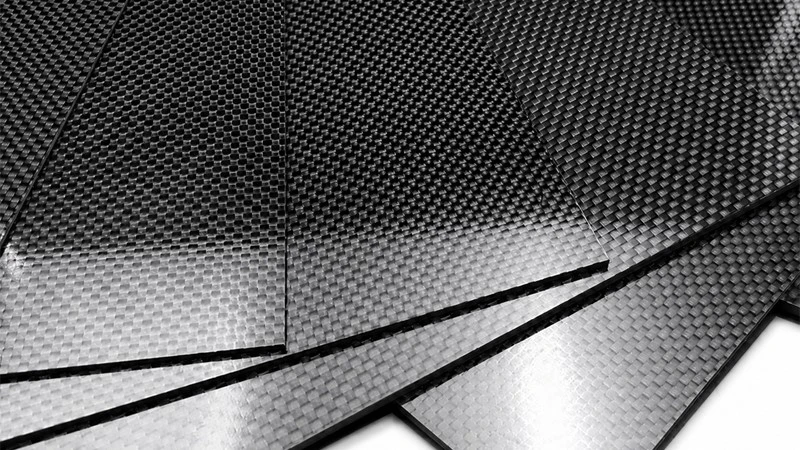
True Toray Carbon Fiber Sheets:
Many low-cost suppliers advertise "high-grade carbon" while mixing in fiberglass layers to cut costs. We source verified T300 and T700 carbon fiber plates with strict resin-to-fiber ratios, ensuring maximum stiffness without adding unnecessary weight.
Traceable Electronic Components:
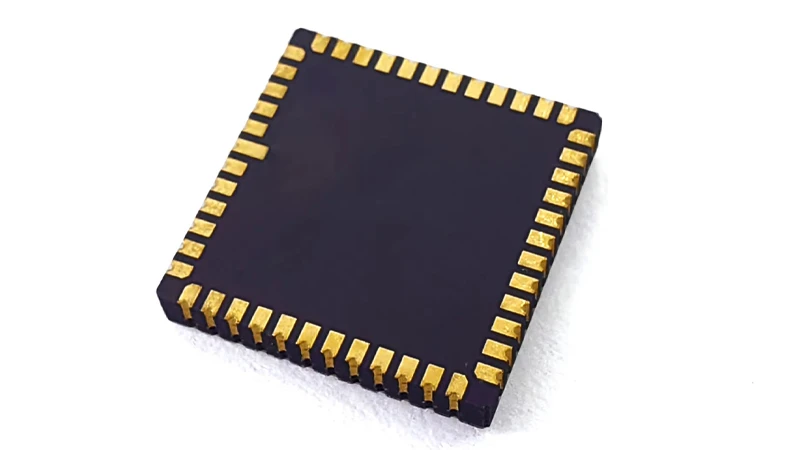
For our flight controllers (FCs), Electronic Speed Controllers (ESCs), and VTX modules, we source authentic MOSFETs, gyros, and MCUs directly from authorized distributors. Counterfeit chips are the #1 cause of unexplained mid-air desyncs, and we eliminate that risk at the receiving dock.
2. Precision CNC Machining & Carbon Finishing
A carbon fiber frame might look simple on paper, but a 0.2mm tolerance error can ruin arm alignment, cause motor vibrations, and turn PID tuning into a nightmare.
Inside our CNC workshop:
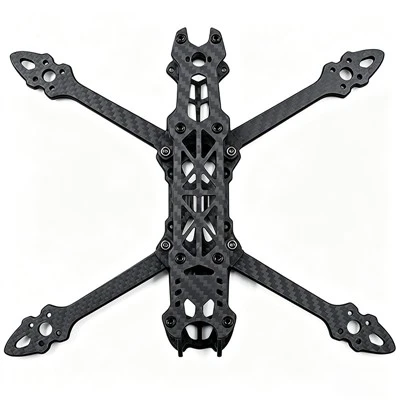
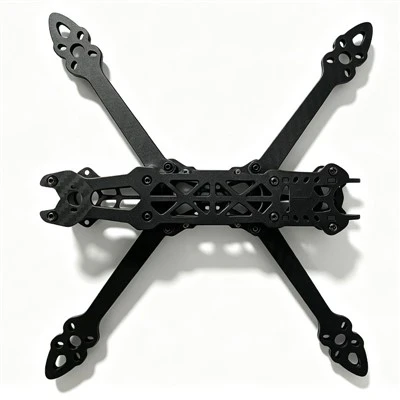
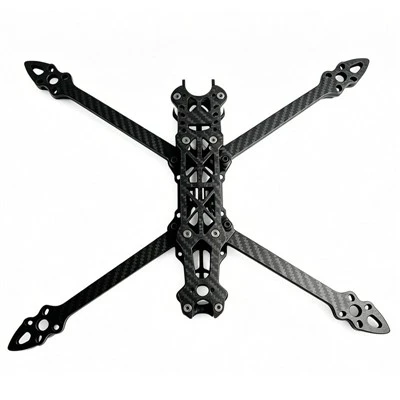
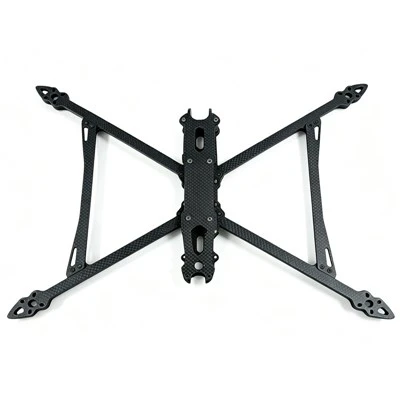
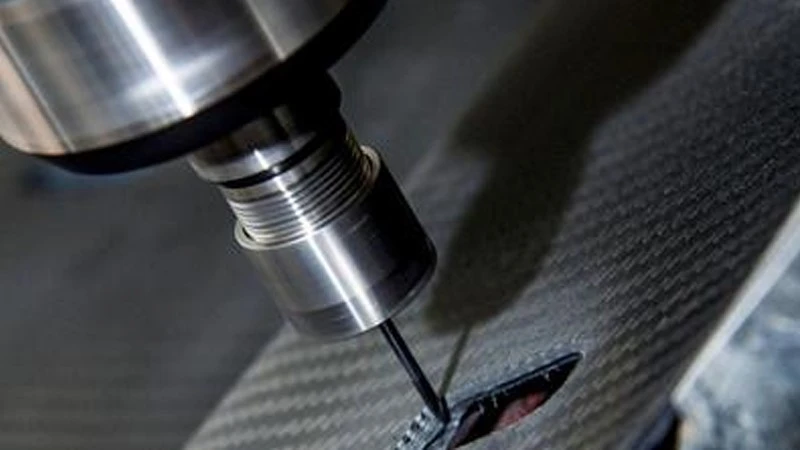
High-Speed Milling & Chamfering: Our CNC routers cut arms, top plates, and camera cages to tight tolerances. Every edge undergoes precision chamfering-not just for a clean aesthetic, but to prevent sharp carbon edges from slicing through battery straps and LiPo balance leads during a crash.
Countersunk Accuracy: We inspect countersunk screw holes on every production run so hardware sits completely flush, preventing stress fractures when bolts are torqued down.
3. SMT Lines and Cleanroom Electronics Assembly
Modern FPV stacks pack immense computing power and high-current handling into tiny 20x20mm and 30.5x30.5mm footprints. Building them reliably requires automated precision.
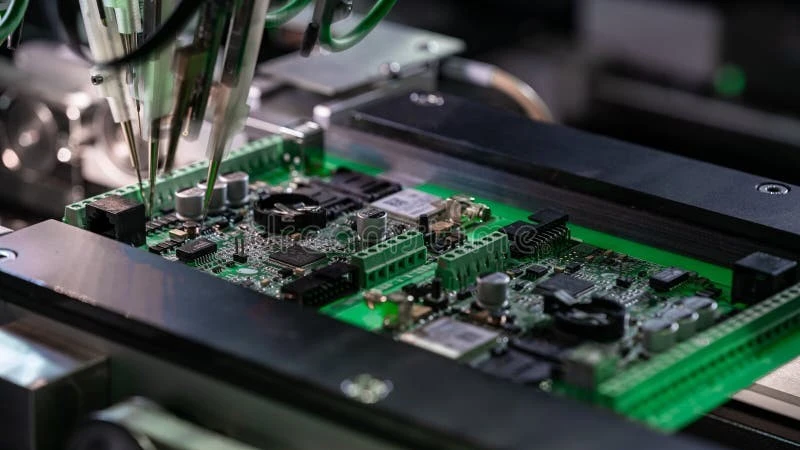
Automated SMT & Reflow Soldering: Our Surface-Mount Technology (SMT) lines place micro-components with optical alignment, followed by temperature-profiled reflow soldering to prevent cold joints.
Conformal Coating & Waterproofing Options: Depending on our clients' target markets, we apply automated conformal coating to protect boards against moisture, dust, and wet grass-a major selling point for retail brands looking to reduce warranty claims.
4. TPU 3D Printing & Injection-Molded Accessories
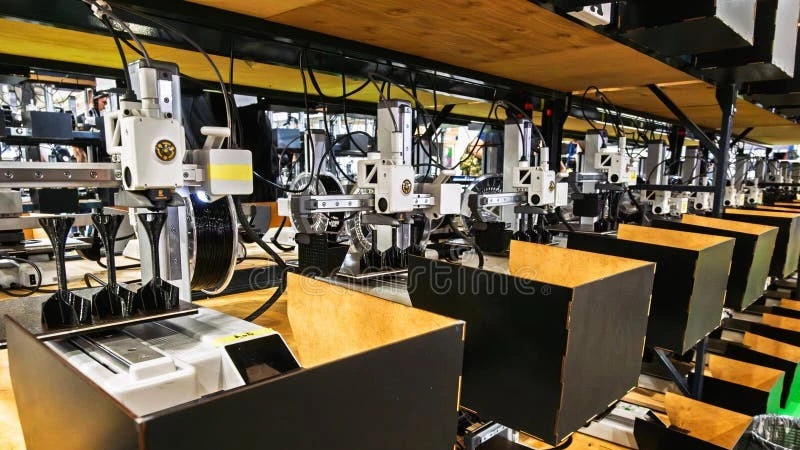
Accessories are often an afterthought for factories, yet they are what pilots interact with every time they fly. Whether it's GoPro mounts, antenna tubes, arm guards, or custom battery pads, we maintain dedicated banks of industrial 3D printers alongside injection-molding lines for high-volume SKUs. This allows our OEM/ODM partners to prototype new mounts in 48 hours and scale to 10,000+ units seamlessly.
5. Our Multi-Stage Quality Control (QC) Protocol
The biggest complaint I hear from buyers switching factories is: "The golden sample was great, but the mass production batch had issues." We prevent this through strict in-line and pre-shipment testing:
- Dimensional & Visual Inspection: Random and batch checks on carbon thickness, weave quality, and CNC hole alignment.
- AOI (Automated Optical Inspection): Every PCB is scanned immediately after soldering to catch microscopic bridge or alignment defects.
- 100% Functional Bench Testing: Every single ESC and Flight Controller is powered on, flashed with test firmware, and load-tested on custom jigs before packaging.
- Hover & Flight Verification: For BNF (Bind-and-Fly) drones and complete custom builds, our test pilots conduct real hover and stick-response checks to verify gyro health and motor balance.
Why Direct Factory Communication Matters for Your Business
When you work directly with a manufacturer rather than a trading company, you gain more than just better unit margins. You get direct access to the engineers who can help optimize your CAD files for mass production, suggest cost-saving material tweaks, and customize packaging for your brand.
Whether you are launching a new line of freestyle frames, sourcing bulk replacement accessories, or developing a custom OEM drone platform, my team is here to make the manufacturing process transparent and predictable.
Ready to discuss your next production run?
Contact our engineering and sales team today with your BOM (Bill of Materials), CAD files, or target specs-and let's build hardware your pilots can trust.
FAQ
Q: Can you accept OEM & ODM orders for FPV frames and electronics?
A: Yes. We support full OEM and ODM services. You can provide CAD files, BOM or reference samples. Our engineering team will review manufacturability, suggest material adjustments and optimize the design for mass production.
Q: What carbon fiber grade do you use for custom FPV frames?
A: We use authentic Toray T300 and T700 carbon fiber sheets with controlled resin-fiber ratio. We do not mix low-cost fiberglass filler inside the carbon panels to cut cost.
Q: Do you test every ESC and flight controller before shipment?
A: Yes. All ESCs and flight controllers go through AOI inspection after soldering, plus 100% bench power-on and load testing with dedicated test jigs before packing.
Q: Can you add conformal coating / waterproof treatment to FPV PCBs?
A: We offer automated conformal coating as an optional service. It protects circuits from moisture, dust and condensation, which helps reduce warranty returns for outdoor flying products.
Q: What is your typical lead time for prototype and mass production?
A: Custom prototype samples normally take 3–7 working days. Mass production lead time depends on order quantity and components stock, usually 15–30 working days after sample confirmation.
Q: What causes high DOA rate for FPV electronics, and how do you avoid it?
A: The main cause is counterfeit chips, cold solder joints and untested hardware. We source electronic components from authorized distributors and run multi-stage QC to eliminate these risks.
Q: Can you make custom TPU 3D printed parts and injection molded accessories?
A: Yes. We have industrial 3D printers for fast prototyping (48h turnaround) and injection molding lines for high-volume accessory production, such as camera mounts, arm guards and antenna holders.
Q: What tolerance can your CNC carbon cutting process achieve?
A: Our CNC machining holds ±0.2mm tolerance for carbon frame plates. All screw holes are countersunk precisely to avoid local stress concentration during assembly.
Q: Do you perform flight tests for finished BNF FPV drones?
A: For BNF and full custom drone builds, our test pilots conduct hover and stick response flight tests to verify gyro performance, motor balance and overall stability.
Q: What information do I need to prepare to start a custom project with Xpert?
A: You can send CAD drawings, BOM list, target quantity, material requirements and target budget. Our sales and engineering team will evaluate and send you a formal quotation.