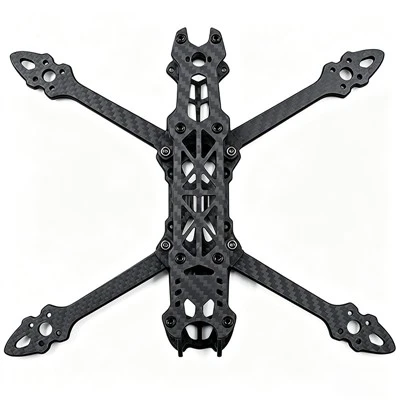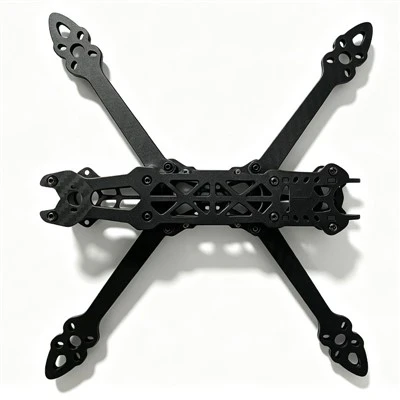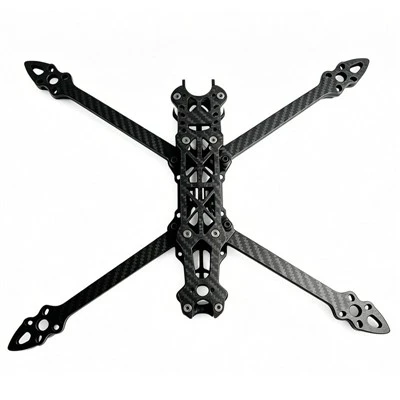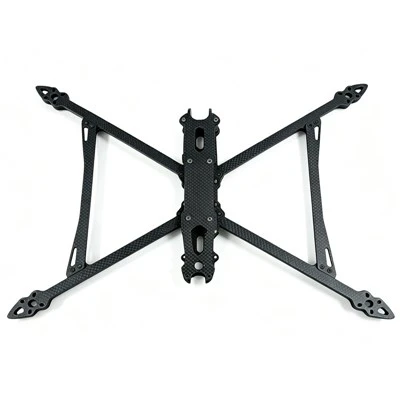
Before answering this question, we need to understand the material performance comparison of drone frames,Let's look at a set of data first:
1.Performance parameters of carbon fiber drone frames:
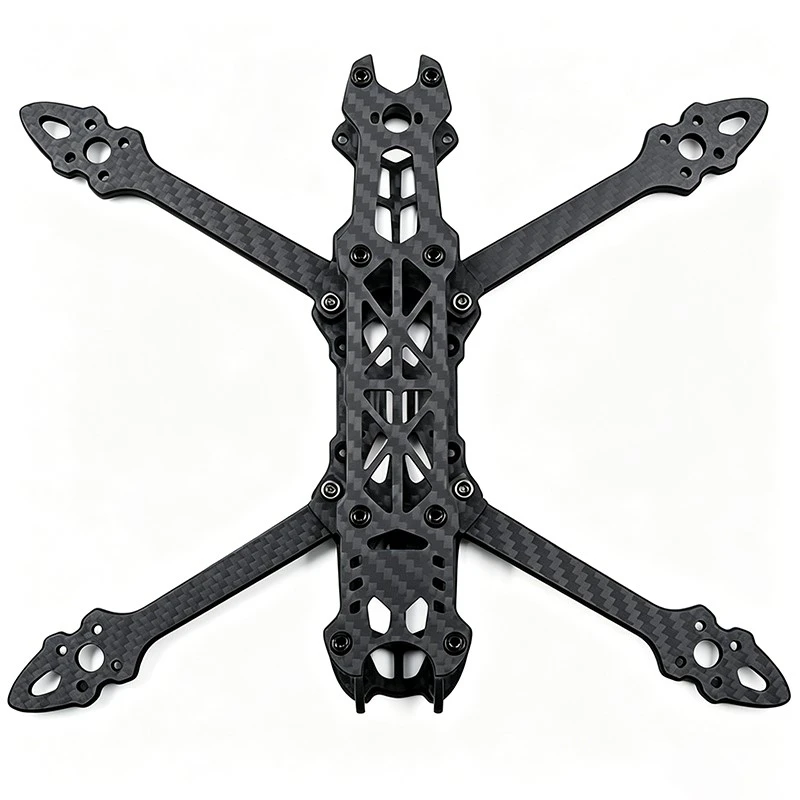
First, the material density of carbon fiber is: 1.6g/cm³,The material density of aluminum alloy is: 2.7g/cm³,Therefore, carbon fiber is approximately 40-45% lighter than aluminum alloy in terms of weight. Then the tensile strength of carbon fiber can reach up to 6000MPa,The aluminum alloy is approximately 572 MPa,It is obvious that the tensile strength of carbon fiber is much higher than that of aluminum alloy, about 10 times higher!
Data source:Comparative Analysis of Core Performance of Carbon Fiber Drone Frames (2025-2026)(https://www.thermalgraphite.com/carbon-fiber-vs-aluminum-strength-weight-performance-2026.html)
In terms of stiffness, the carbon fiber drone frame is twice that of the aluminum alloy drone frame,This means it has less curvature and better handling. The carbon fiber drone frame maintains its shape even under stress, offering better operational performance.
| Material | Specific Stiffness(MSI) | Specific Strength(KSI) |
| Carbon Fiber | 200 | 1800 |
| 6061 Aluminum | 100 | 350 |
| 4130 Steel | 100 | 417 |
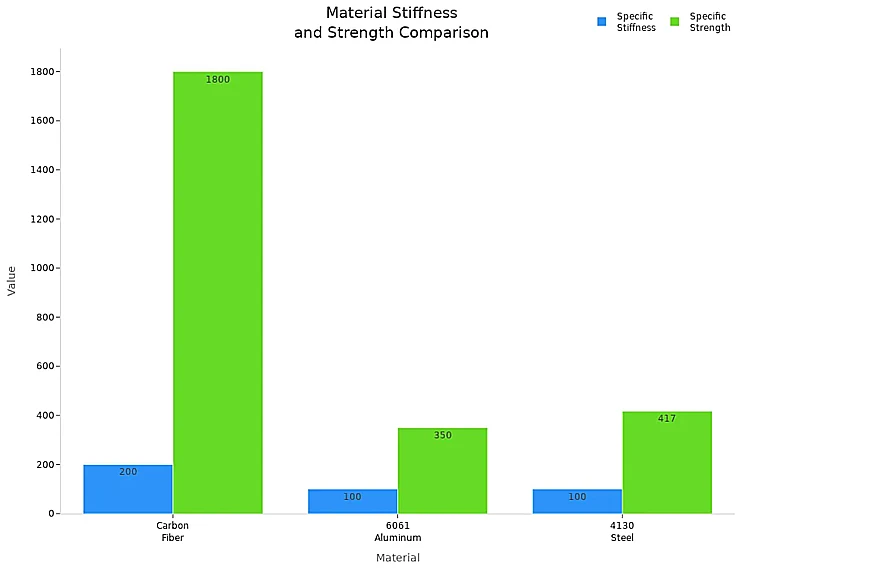
After reviewing this set of data, you must have gained a preliminary understanding of the performance of carbon fiber drone frames. So, what are the advantages of a carbon fiber drone frame in terms of drone performance?
2.Performance advantages of carbon fiber drones:

Under the same powertrain conditions, the performance improvements of carbon fiber drones over aluminum alloy drones are mainly reflected in flight endurance, payload capacity, and structural rigidity. According to the latest industry research for 2025-2026 (such as experimental data from MDPI and ResearchGate),Under the same power conditions, the endurance of carbon fiber drones is approximately 25%-40% higher than that of aluminum alloy drones. The main reason is the aforementioned fact that the density of carbon fiber is only 60% that of aluminum alloy, resulting in longer flight time. Similarly, in terms of drone payload, the reduced frame weight is directly converted into additional payload space, which allows carbon fiber drones to carry approximately 30%-36% more payload than aluminum alloy drones. The same applies to the thrust-to-weight ratio, which has increased by approximately 40%, meaning that the carbon fiber drone boasts faster climbing speeds and more responsive turning. Therefore, in scenarios where extreme flight duration and sensitivity are pursued, carbon fiber drones outperform aluminum alloy drones by approximately 30%.
At this point, you must already have an answer in mind regarding the selection of drone materials, right? Don't worry, let's take a look at another set of interesting data.
3.Sales volume and market share of carbon fiber drone frames:
According to the latest industry reports for 2025 and 2026 released by authoritative institutions such as Intel Market Research, Grand View Research, and Technavio,Carbon fiber dominates the professional-grade drone frame market.
|
indicator |
carbon fiber drone frame |
Aluminum alloy drone frame |
|
Market penetration rate |
> 60% (Professional and commercial drones) |
approximately 15% - 20% |
|
Market size in 2025 |
Expected to reach $2.17 billion |
approximately $450 million |
|
Compound growth rate |
16.5% (Growth is extremely rapid) |
约6.5% (Growth is relatively stable) |
Sales volume and market share of drone frame materials in 2025(Data source:https://www.intelmarketresearch.com/composite-material-drone-2025-2032-460-4878)The market share of carbon fiber drone frames is approximately 60%-70%,The market share of aluminum alloy drone frames is approximately 15%-20%;In terms of sales growth rate, the growth rate of carbon fiber drone frames is approximately 16.5%, while that of aluminum alloy drone frames is about 5%-8%;The result is that consumers clearly prefer carbon fiber drone frames.
The dominance of carbon fiber drone frames:According to Intel Market Research (2025), Over 60% of professional-grade drone models (such as DJI Mavic 3/4 series, etc.) have fully adopted carbon fiber composite materials. Due to its extremely high strength-to-weight ratio, a carbon fiber frame can improve endurance performance by approximately 30%-40% compared to an aluminum alloy frame. Therefore, the 2025 market data shows that carbon fiber drone frames hold an absolute advantage in sales (approximately 3-4 times that of aluminum alloy) due to their extreme weight-reduction performance.

How about it? Regarding "Why is carbon fiber used in drones?", I believe you already have a very clear answer. Want to know more about drones,You can contact us via email at winnie@xpfpv.com for inquiries, Or call 13425111140.