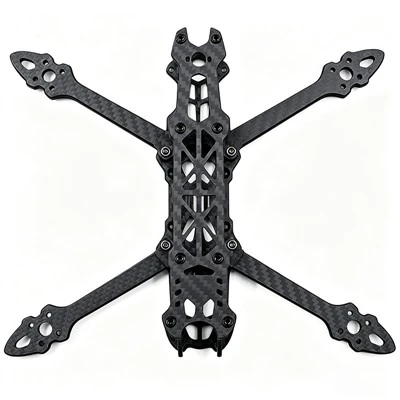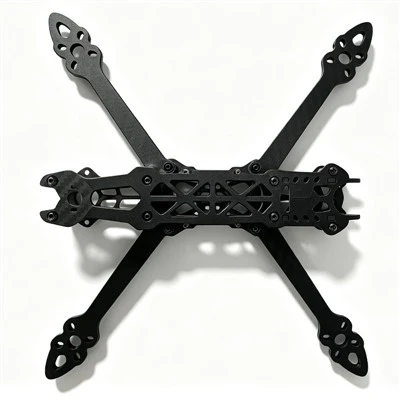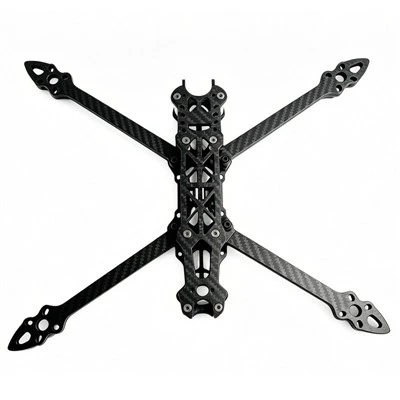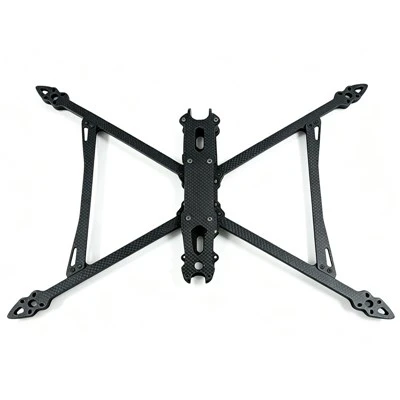
FPV Drone Frame Size & Brushless Motor Selection Reference Chart
| Drone Frame Size (inch) | Recommended Motor | Stator Size (mm) | KV Rating | Standard Voltage (S) | Compatible Propeller (inch) | Static Thrust per Motor (g) | Application Scenarios | Flight Profile |
| 5" | 2207 / 2306 | 22×7 / 23×6 | 2400-2700KV | 4S | 5.1×5.0 / 5×4.3 | 800-1200 | FPV racing, freestyle flight, beginner training, indoor & outdoor practice | Agile & Responsive · Ultra-lightweight |
| 6" | 2208 / 2506 | 22×8 / 25×6 | 1900-2200KV | 4S / 6S | 6×4 / 6×5 | 1200-1600 | Mid-range freestyle, lightweight aerial filming, urban inspection | Balanced All-rounder · Mobility + Endurance |
| 7" | 2807 / 2810 | 28×7 / 28×10 | 1300-1800KV | 4S / 6S | 7×4 / 7×5 | 1500-2200 | Long-range cruise, light industrial inspection, cinematic FPV | Long-Range Stable · High efficiency low consumption |
| 8" | 2812 / 3110 | 28×12 / 31×10 | 1100-1500KV | 6S | 8×4.5 / 8×5 | 2000-2800 | Mid-range cruise, professional cinematic filming, light mapping | Balanced Payload · Footage stability priority |
| 9" | 3115 / 3210 | 31×15 / 32×10 | 900-1300KV | 6S | 9×5 / 9×6 | 2500-3500 | Industrial inspection, mid-range 3D mapping, security patrol | Entry Industrial · Stable continuous output |
| 10" | 3215 / 3510 | 32×15 / 35×10 | 700-1000KV | 6S / 12S | 10×5 / 10×6 | 3000-4500 | Precision industrial mapping, wide-area security patrol, emergency reconnaissance | Heavy-Duty Industrial · Multi-device payload capacity |
| 11" | 3515 / 4010 | 35×15 / 40×10 | 600-850KV | 6S / 12S | 11×5.5 / 11×6 | 4000-5500 | Heavy-load inspection, small payload delivery, mountain patrol | High Payload · Medium load long endurance |
| 12" | 4012 / 4210 | 40×12 / 42×10 | 500-750KV | 12S | 12×6 / 12×7 | 5000-7000 | Large-scale mapping, entry-level agricultural spraying, environmental monitoring | Heavy Industrial · High torque continuous operation |
| 13" | 4215 / 4220 | 42×15 / 42×20 | 400-650KV | 12S | 13×6.5 / 13×7 | 6000-9000 | Agricultural plant protection, emergency rescue & supply airdrop, heavy transport | Professional Heavy-Lift · Industrial grade payload |
| 15" | 4225 / 5010 | 42×25 / 50×10 | 320-500KV | 12S / 14S | 15×7 / 15×8 | 8000-12000 | Large-scale agricultural spraying, heavy logistics, border security patrol | Ultra-Heavy Industrial · Maximum load capacity |
FPV Drone Motor Basics: Beginner's Guide to UAV Brushless Motors
1. How to Read FPV Brushless Motor Size Codes

All standard outrunner FPV brushless motors adopt a unified four-digit size coding rule, which is the core standard for global FPV hardware matching. The numbers directly correspond to the stator dimensions (the core power component of the motor), not the outer casing size.
Four-digit coding rule:
· First two digits: Stator diameter (unit: mm)
· Last two digits: Stator height (unit: mm)
Typical examples:
· 2812 motor = 28mm stator diameter + 12mm stator height
· 4215 motor = 42mm stator diameter + 15mm stator height
Stator size determines the core performance of the motor: diameter mainly affects torque and load capacity, while height determines continuous power output and high-speed stability. Larger stator sizes bring stronger thrust and higher load capacity, accompanied by increased weight and power consumption, which is why scenario-based matching is essential.
2.FPV Brushless Motor Mounting Compatibility
Mount compatibility is a critical factor when replacing or matching FPV brushless motors. Even if power parameters meet your requirements, inconsistent mounting dimensions will prevent the motor from being installed onto your drone frame.
The core mounting parameters you need to confirm:
1.Mount Hole Spacing: Industry mainstream standards include 16×16mm, 19×19mm, 25×25mm, 30×30mm. Different motor series adopt different hole layouts.
2.Shaft Diameter: Matches propeller clamping structure; mismatched shaft size cannot fix propellers securely.
3.Base Height & Outer Diameter: Avoid collision between the motor and frame arms or power distribution board after installation.
4.Wire Outlet Direction: Top outlet / Bottom outlet, affects internal wiring layout inside the airframe.

3.How Does an FPV Brushless Drone Motor Work?
An FPV brushless drone motor belongs to outrunner brushless motors, serving as the core power component of FPV drones. Unlike brushed motors, it has no physical carbon brush contact, delivering higher efficiency, lower vibration, longer service life and stronger power output, which is why nearly all FPV and industrial UAV platforms adopt this design.
The motor mainly consists of two core parts: stator (stationary part with copper windings) and rotor (outer rotating shell embedded with permanent magnets). The electronic speed controller (ESC) transmits alternating current to the stator windings. The energized coils generate alternating magnetic fields. Through continuous magnetic attraction and repulsion between the stator and rotor permanent magnets, the outer rotor rotates and drives the propeller to spin, generating thrust for drone flight.
Key parameters such as stator size, winding layout and KV value directly affect motor performance:
- Larger stator size brings higher torque and greater load capacity
- Different winding schemes adjust KV rating, matching different voltage and propeller combinations
- Low-vibration structural design guarantees stable footage for cinematic FPV

4.Relationship Between FPV Motors and the Drone System
The FPV brushless motor acts as the core power execution unit of the entire drone system. No matter how advanced the flight controller, battery, ESC and frame are, flight performance ultimately depends on the matching between motors and other components.
A complete drone power system forms a closed cooperation chain:
Battery → ESC (Electronic Speed Controller) → FPV Brushless Motor → Propeller
- Flight controller sends throttle commands to the ESC
- ESC converts DC power from the battery into alternating current to drive the motor
- Motors drive propellers to generate thrust, controlling lift, speed and attitude
Motor specifications restrict the overall system performance:
1.Motor size and KV value determine the matching requirements of battery voltage, propeller size and ESC current load.
2.Thrust-to-weight ratio of motors directly limits maximum takeoff weight, load capacity and flight agility.
3.Vibration characteristics of motors affect aerial shooting stability and the service life of the airframe and electronic equipment.
Mismatched motors will cause a series of system problems: insufficient thrust, overheating ESCs, short flight time, severe vibration and unstable hovering.