1. First, the core conclusion

A 7-inch FPV drone can theoretically be used for ultra-small item, short-distance delivery in enclosed scenarios, but due to limitations in payload, battery life, wind resistance, and regulations, it is unsuitable for commercial or large-scale civilian delivery. It can only serve as a supplementary tool in specific controlled environments (e.g., factories, campuses, small communities).
2. Key Factors for Delivery Requirements

2.1 First is the load capacity: racing and industrial types are clearly polarized.
• Mainstream racing 7-inch FPV drones prioritize speed and maneuverability, with an actual effective payload typically only 0.2-0.5kg (e.g., keys, USB drives, small trinkets), making it difficult to carry slightly heavier items like books or small electronic devices.
• Some industrial-grade modified models can carry loads of 1.5-3kg, but these require additional reinforcement of motors, batteries, and frames, sacrificing the lightweight advantage of racing FPV drones, while significantly increasing cost and control difficulty, placing them outside the standard FPV drone category.
2. 2 Next, analyze the shortcoming of battery life: unable to meet regular delivery demands.
• Racing-style 7-inch FPV drones generally use lightweight lithium batteries, with a single flight time of only 3-5 minutes, capable of covering ultra-short-distance deliveries within a few hundred meters (such as point-to-point delivery within campuses).
• If a longer distance needs to be covered (such as urban communities or rural areas), frequent battery replacements or mid-journey charging are required, resulting in significantly lower efficiency compared to traditional logistics methods, along with the safety risk of "running out of power midway."
2.3 Finally, environmental adaptability should be considered: wind resistance and waterproof capability.
• The 7-inch FPV drone has a compact body and a low center of gravity, with a wind resistance rating typically only at levels 3-4 (wind speed 3.5-5.4 m/s). It is highly prone to losing control or damaging electronic components in strong winds or rainy weather, and can only operate in windless, dry, and clear conditions.

3. Applicable Scenarios and Renovation Suggestions
3.1 Feasible scenario
• Small-scale closed-loop delivery: Internal parts delivery within factories, document/sample transport within campuses, and urgent supplies (such as medicine, keys) delivery in small communities.
• Special demand scenarios: small item delivery in hazardous environments (e.g., high-temperature or radiation zones), or as an entertaining "tech experience service" (e.g., customized delivery in high-end communities).


3.2 Modification direction
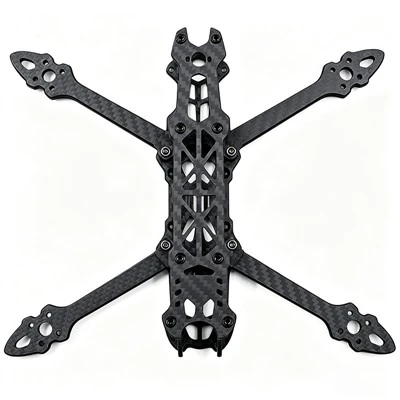
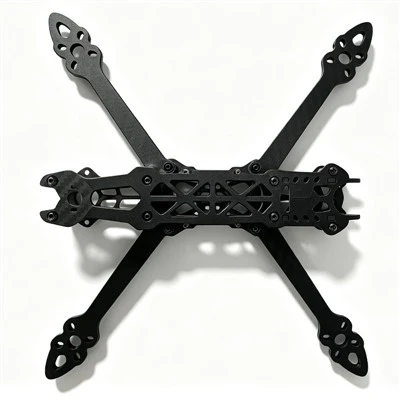
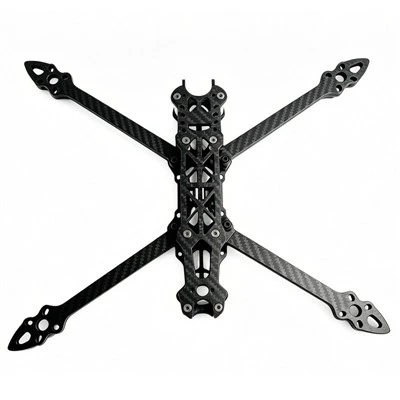
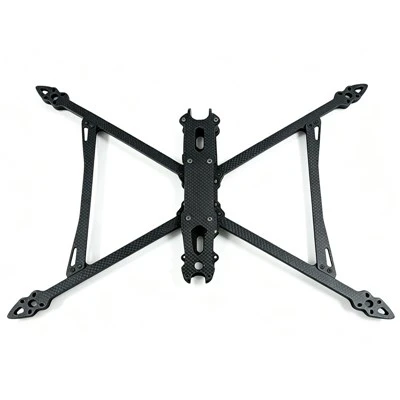
• Load capacity upgrade: Replacing with a high-power motor, reinforcing the carbon fiber frame, and increasing battery capacity, but at the cost of flight speed and endurance.
• Safety Enhancement: Installation of GPS positioning, obstacle avoidance sensors, and a parachute system to meet basic safety standards.
• Compliance Adaptation: Adjust the flight control system according to local regulations and apply for a temporary flight permit (restricted to enclosed areas only).
4. Summary and Recommendations
If your goal is commercial small parcel delivery, it is recommended to choose industrial-grade logistics drones, as their payload, endurance, wind resistance, and compliance have been professionally verified.
If only small-scale, low-frequency internal deliveries are needed, lightweight modifications to a 7-inch FPV drone can be attempted, but safety risks and regulatory restrictions must be thoroughly assessed, and it should only be used in closed, controlled environments.
FAQ
Q: What payload can a 7-inch FPV drone carry for parcel delivery?
A: A typical 7-inch heavy-lift FPV drone can safely deliver small parcels of 0.5–2kg. The actual load depends on frame strength, motor & propeller matching, battery capacity and flight environment.
Q: What is the maximum flight range and flight time for parcel delivery missions?
A: With a 0.5kg payload, flight time can reach 12–18 minutes; heavier payloads will shorten endurance. The effective one-way delivery range is usually 3–8km, affected by wind, altitude and payload weight.
Q: Can 7-inch FPV delivery drones fly in rainy or windy conditions?
A: Most standard 7-inch FPV models are not IP waterproof. They are suitable for low-wind, dry weather only. Custom waterproof and wind-resistant versions are available upon request.
Q: What are the main limitations of using 7-inch FPV drones for small parcel delivery?
A: Limited payload & flight time, manual FPV control requirement, weather sensitivity, and regulatory flight zone restrictions. It works best for short-distance emergency delivery instead of large-scale commercial logistics.
Q: Do we need to customize motors or frames for delivery use?
A: Yes. Delivery versions require reinforced frame, low-KV high-torque motors and optimized propeller combinations to improve stability under load. Standard freestyle 7-inch drones are not recommended for continuous delivery tasks.
Q: How to drop the parcel safely during delivery?
A: You can install a servo-controlled release mechanism. The system can release packages mid-air or land for manual unloading, depending on your mission requirements.