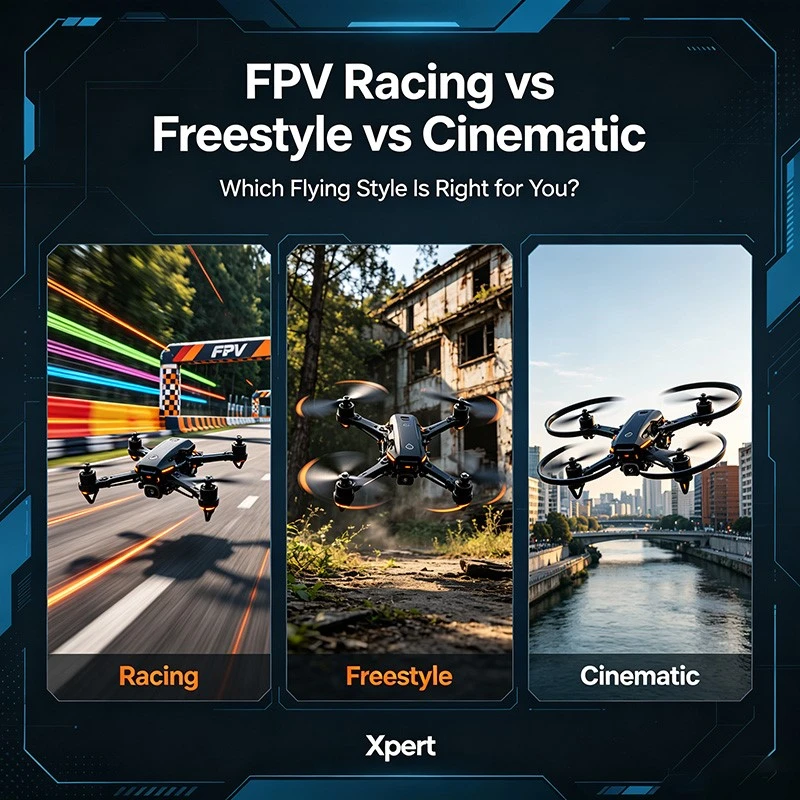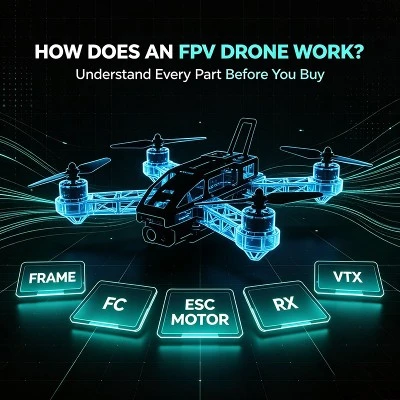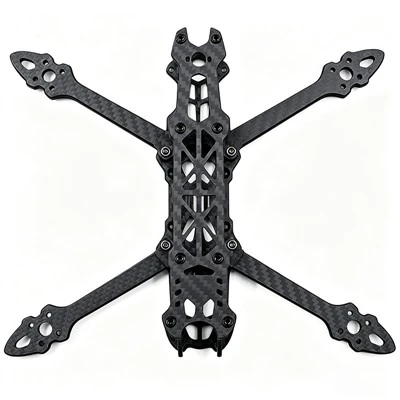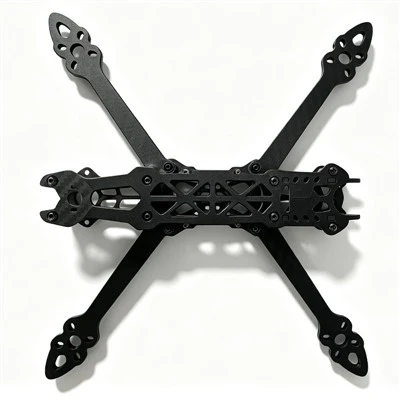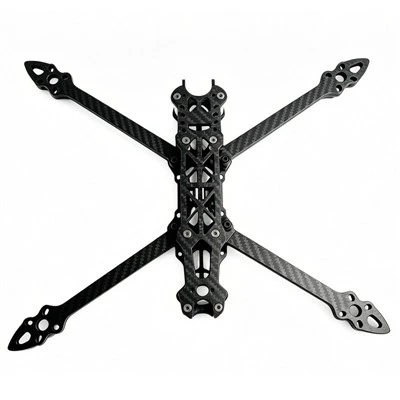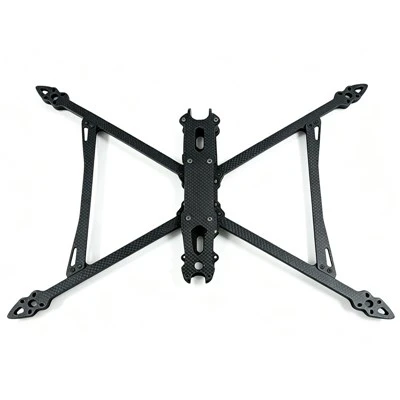
The 5-inch FPV drone is one of the most popular sizes in the FPV drone field, combining speed and maneuverability. So, how fast can it actually fly? The answer depends on your configuration, purpose, and flying style-from 100 km/h for everyday freestyle to 200 km/h+ for racing modifications, and even extreme challengers have broken the 500 km/h record. This article will provide a comprehensive analysis of the speed performance of 5-inch FPV drones.
1. Overview of Speeds in Different Scenarios

1.1 Freestyle -- 100~140km/h
For most daily freestyle FPV pilots, a 5-inch FPV drone can typically reach 100–120 km/h in level flight, and 130–150 km/h when diving. A typical configuration such as a 6S battery with a 2306 1900KV motor achieves about 110 km/h in level flight and up to 140 km/h in sustained dives. This speed is already enough to bring a strong visual impact and handling thrill.
The speeds of mainstream ready-to-fly freestyle aircraft on the market are roughly as follows:
1.2 Racing -- 160~250km/h
Racing is the pinnacle of speed for 5-inch FPV drones. Professional racing models typically reach 200–250 km/h on the track, and some extremely lightweight racing drones can go even higher.
up to 245km/h (152mph), one of the fastest mass-produced 5-inch racing drones currently on the market.
Manual mode can reach 205 km/h.

The core difference between racing drones and freestyle drones lies in the fact that racing drones adopt an ultra-lightweight design (dry weight can be as low as 250-280g), paired with high-pitch propellers and high-speed motors, sacrificing endurance and durability in exchange for ultimate speed.
1.3 Cruising and Voyaging - 60~120km/h
If what you seek is long-distance cruising experience, the speed is usually between 60 and 120 km/h. This speed range balances endurance and efficiency, making it suitable for long-distance flight.
2. Key Factors Affecting Speed
The speed of a 5-inch FPV drone is not a fixed value, but is determined by multiple hardware configurations. The following are four core factors that affect speed:

2.1 Battery: 4S vs 6S
Battery voltage is the most fundamental factor determining speed. The voltage difference between a 4S battery (14.8V) and a 6S battery (22.2V) is significant. Battery voltage multiplied by the motor's KV rating gives the theoretical no-load speed - the higher the voltage, the faster the rotation speed, and naturally the faster the speed.
This is also why the FPV community has generally shifted to 6S batteries. With the same 2207 motor, the output power in a 6S configuration is much higher than in 4S.
2.2 Motor KV value
The KV value represents the no-load speed (RPM) per volt of voltage. For a 5-inch model:
- 6S battery: recommended 1750~1960KV
- 4S battery: recommended 2450~2750KV
For example, with a 2207 1960KV motor paired with a 6S battery, the no-load speed is approximately 43,500 RPM, and under load it is about 35,000–37,000 RPM. The higher the KV value, the higher the theoretical top speed, but it also brings higher current consumption and heat generation.
2.3 propeller
The pitch of the propeller and the number of blades directly affect the speed:
- High-pitch propellers (e.g., 5040-5050 three-blade props): produce greater thrust and higher top speed.
- Three-blade propeller: strong grip but high drag, top speed will be lower than a two-blade propeller.
- Twin-blade paddle: low resistance, suitable for racing scenarios pursuing ultimate speed.
It should be noted that although larger blades or higher pitch can increase speed, they will also consume more power.
2.4 Weight and Aerodynamics
"Lighter is faster" is the golden rule of FPV. The dry weight of a racing drone is usually controlled at 250-280g, and every gram over 280g will lose cornering speed. In addition, the aerodynamic design of the frame is also crucial-with the same set of motors and propellers, a racing frame can reach 250km/h, while a freestyle frame may only reach 190km/h.

3. Speed Record: The Ultimate Challenge of 5-inch FPV
If the above speed is "routine operation", then the ultimate speed challenge is another world.
In 2024, Luke Maximo Bell set a Guinness World Record with an FPV drone speed of 480.2 km/h. Chinese players also performed well - Team "PROWESS" achieved a Guinness-certified speed of 340.78 km/h, and even reached 358 km/h under tailwind conditions.
More Chinese players built a 5-inch high-speed drone in the summer of 2025, flying at an astonishing speed of 503 km/h. These extreme speeds typically use customized aerodynamic designs, high-voltage batteries, and extreme lightweight solutions.
However, it should be noted that these records were achieved under ideal test conditions (tailwind, dedicated runway, extreme modifications), and the daily flights of ordinary players are far from reaching this level.
4. Speed comparison with other models
| Aircraft model | Typical speed | Explanation |
| 5-inch racing FPV | 200~250km/h | Speed king, born for the track. |
| 5-inch FPV freestyle | 100~180km/h | Balance speed and handling. |
| DJI Avata 2 | 97km/h | Finished machine with guard ring, speed limited. |
| DJI FPV (Original) | 140km/h | The speed representative in the finished machine. |
| Micro Whoop | 50~70km/h | Small indoor airplane |
The speed advantage of a 5-inch FPV drone is obvious-even with a standard freestyle setup, it can easily surpass the top speed of almost any ready-to-fly drone on the market.
5. Summary
The speed of a 5-inch FPV drone is a range rather than a single number:
How fast your 5-inch drone can fly depends on the combined combination of battery, motor, propellers, weight, and aerodynamics. Whether you are a racing pilot chasing extreme speed or a freestyle pilot who enjoys the thrill of acrobatic control, the 5-inch FPV platform can meet your needs-the key is to choose the right configuration according to your flying style.
Advanced aerobatics/ARF:
160–190 km/h - mainstream performance level
Professional racing:
200~250 km/h - a machine built for speed.
Extreme Tuning:
300~500km/h+ - The Domain of Record Challengers
FAQ
Q: How fast can a 5-inch FPV drone actually go? What's the difference between everyday flying and the absolute limit?
A: Everyday flying falls into two categories-Freestyle typically runs 100–140km/h, while professional racing hits 200–250km/h. Extreme challengers, through ultra-lightweight builds, high-voltage batteries, and aerodynamic mods, can exceed 300km/h. The current Guinness World Record stands at 480.2km/h, and some Chinese hobbyists have even clocked 503km/h in tests. However, always remember: safe everyday flying is far below these records-never chase top speed near people or in urban areas.
Q: How much faster is a 6S battery compared to 4S? Which one should I choose?
A: 6S (22.2V) has 50% higher voltage than 4S (14.8V), giving a theoretical 50% higher no-load RPM with the same motor KV. In real flight, a 6S setup typically outruns a comparable 4S by 20–40km/h, with much snappier acceleration. We recommend 6S as modern motors, ESCs, and props are optimized for it. Also, 6S draws lower current (for the same power), runs cooler, and is more efficient. 4S is better for older gear or tight-budget beginners.
Q: Does a higher KV always mean a higher top speed?
A: Not exactly. KV determines RPM per volt, but higher KV also draws more current and generates more heat. If your motor, ESC, and battery can't deliver enough power, high KV will cause voltage sag, reducing actual RPM. Matching is crucial: for 6S, use 1750–1960KV; for 4S, use 2450–2750KV. Blindly chasing high KV without proper cooling and power supply will hurt performance or even fry your gear.
Q: How big is the speed gap between a racing drone and a freestyle drone? Why?
A: For the same 5-inch class, racing quads can exceed 240km/h, while freestyle rigs typically hit 160–190km/h-a gap of about 50–80km/h. Three reasons: ①Weight-racers can be as light as 250g dry, freestyle builds are usually 350–450g; ②Aerodynamics-racing frames are sleek, narrow, and low-drag; ③Props-racers use high-pitch bi-blades or lightweight tri-blades for top speed, while freestyle props prioritize grip and response. Racers sacrifice durability and flight time for speed; freestyle drones are more all-rounders.
Q: How much do propellers affect speed? Should I choose high-pitch or low-pitch props?
A: Huge impact. High-pitch props (e.g., 5040, 5050) cover more distance per revolution, giving higher top speed, but they spool slower and draw more current. Low-pitch props (e.g., 5030, mild 5040 tri-blades) accelerate quicker, great for freestyle tricks, but limit top speed. Also, bi-blades have less drag and higher top speed than tri-blades of the same pitch, but feel more "slippery" in control. Recommendation: for racing, go high-pitch bi- or tri-blades; for freestyle, choose medium-pitch (like 5040 tri-blade) for a balance of speed and control.
Q: I'm a beginner-what speed should I aim for? Any safety tips?
A: Beginners should start with freestyle mode or a simulator. Keep your early real-flight speed under 60–80km/h, mastering hovering, turns, and basic patterns. Once you're confident, gradually push beyond 100km/h. Safety first: ①Always fly in open, empty areas; ②Before your first high-speed run, use GPS or a radar gun to verify actual speed; ③Ensure your battery has sufficient C-rating (≥100C recommended) to avoid mid-air power loss; ④Wear quality goggles and keep your LOS (line of sight) clear; ⑤Never dive at high speed over cities, roads, or crowds. Speed can be developed over time-safety cannot be retried.