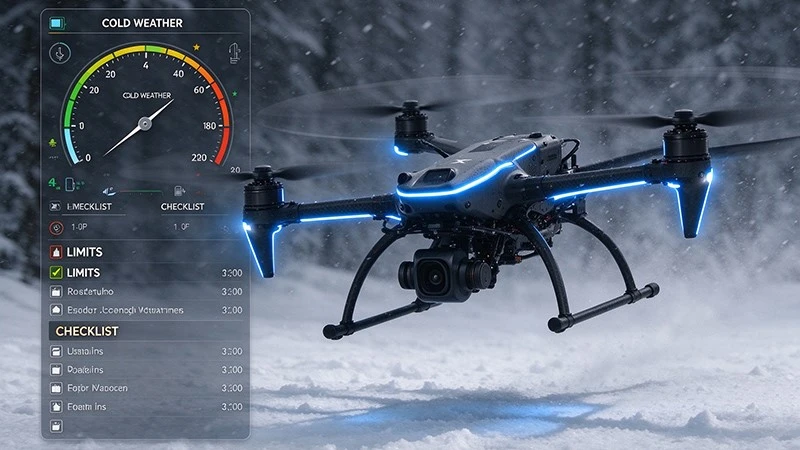
Cold weather does not have to ground your FPV fleet. It can, however, punish every shortcut in battery management, moisture control, and pre-flight discipline. The difference between a productive winter session and a damaged quad or a swollen LiPo usually comes down to a handful of thresholds that are easy to ignore and expensive to learn the hard way. This guide puts those thresholds in plain terms: what the cold actually does to your equipment, where the hard limits sit, and which procedures belong in every winter flight.
1. LiPo Batteries: Temperature Limits, Charging Safety, and Pre-Heating
The hard numbers most pilots never check
LiPo chemistry does not stop working in the cold, but it does move the goalposts. The discharge window for most LiPo packs sits between −20°C and 60°C, while charging is only safe between 0°C and 45°C. Performance begins to degrade meaningfully below −10°C, and at 32°F (0°C) a typical pack may deliver only about 80% of its rated capacity. At 0°F (−18°C) or below, usable capacity can collapse to 50–60%, and overall flight time reductions of 20–50% are a realistic planning assumption.
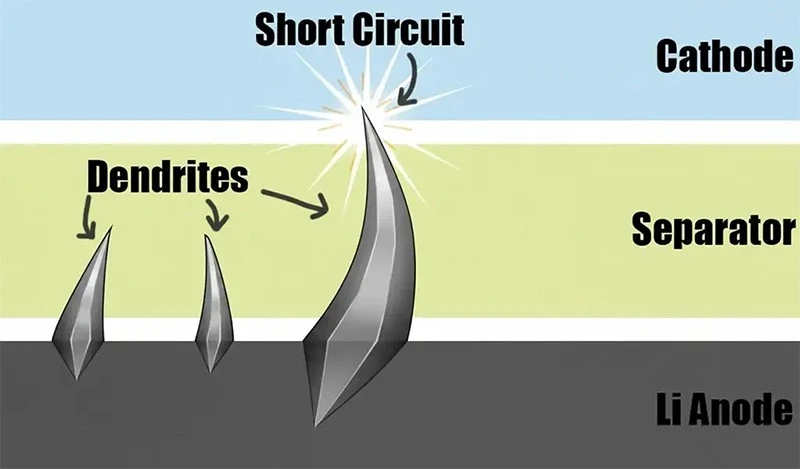
The mechanism is the same one described in every credible cold-weather guide: low temperature slows lithium-ion mobility, internal resistance rises, and voltage sags under load far sooner than it would in summer. What many pilots miss is the charging side. Charging a LiPo below 0°C can cause lithium plating - metallic lithium deposits on the anode that permanently reduce capacity and introduce a safety hazard. A cold pack that "looks fine" and accepts a charge can be quietly degrading every time it is plugged in below freezing.
Charging rules for winter operations
Never charge below 0°C. If a pack has been outside, let it return to room temperature naturally for 30–60 minutes before connecting a charger.
Do not charge a pack that is hot to the touch after a flight (above roughly 38°C / 100°F) or one that has been sitting in direct sun.
Storage voltage remains 3.7–3.8 V per cell. Cold storage does not lower the voltage floor; full charges and deep discharges both accelerate degradation.
Inspect for swelling, cracks, or damaged leads before every charge. A pack that has been flown cold and then charged while still chilled is a higher-risk candidate for internal damage.
Pre-heating: target core temperature, not surface warmth
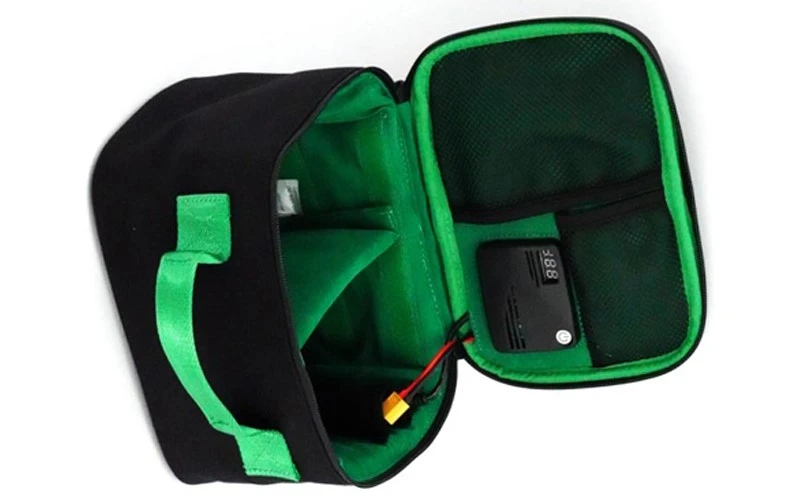
Bring packs to 60–80°F (15–27°C) before takeoff. Surface warmth is misleading; the goal is to get the cell stack itself out of the cold-soaked state. Insulated cases with chemical hand warmers wrapped in a towel remain the field standard, but keep the warmer from direct contact with the pack to avoid localized hot spots. A 12V heated LiPo bag powered by a field pack works well for multi-battery sessions, and keeping the case on the floorboard with the heater running during transport is a practical low-cost method. Never use a hair dryer or heat gun - uneven heating creates thermal stress across the cell stack.
2. Flight Execution: Voltage Margins and Warm-Up Discipline
Cold-weather voltage sag is not a linear scale-down of summer behavior. A pack that holds 4.2 V per cell on the bench can drop toward 3.5 V or lower the moment throttle is applied in freezing air, triggering a low-voltage failsafe before the pilot has processed what happened. The response is not to "fly by feel" but to tighten the numbers before takeoff.
Raise your landing voltage. While 3.3 V per cell is a common normal-condition landing alert, winter operations call for landing at 3.5 V per cell or higher, with some guides recommending 3.6–3.7 V in extreme cold to account for unpredictable capacity drops. On the OSD, bring the minimum voltage warning up by 0.1–0.2 V per cell before the first pack.
Arm immediately, warm up gently. Do not leave the quad sitting on frozen ground while waiting for GPS lock. Power on, verify video and satellite count, and take off. The first 30 seconds should be a gentle cruise - no punch-outs, no power loops. The current draw generates internal heat; the warm-up lap is how the pack transitions from "pre-heated" to "self-sustaining."
Plan for reserve, not for rated capacity. With flight time reduced by 20–50%, conservative mission planning and increased return-to-home battery reserves are not optional in cold wind conditions. A route that fits comfortably in summer may not leave enough margin for a headwind return at winter temperatures.
3. Moisture and Condensation: Coating Is Not Waterproofing
Condensation remains the most underestimated winter hazard. Bringing a cold-soaked quad into a warm car or room deposits microscopic water droplets directly onto exposed pads, flight controller pins, ESC surfaces, and VTX connectors. Silicone conformal coating is the correct defense for splash, wet grass, and light moisture - but the application is where most damage occurs.
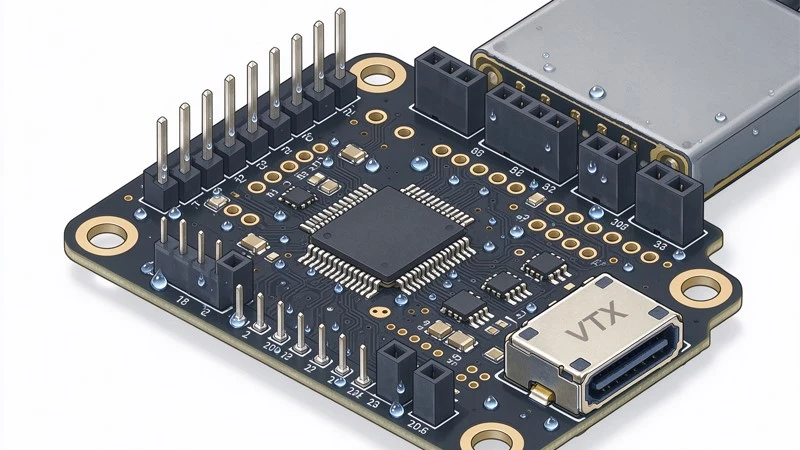
What must stay uncoated
Never coat the following: USB connectors (coating blocks data pins), button tops (boot buttons stop making contact), the barometer sensor hole (silicone permanently blocks the pressure port and ruins altitude readings), SD card slot contacts, microphone holes on air units, and pin headers you may need to solder later.
A common and expensive mistake: do not plug a USB cable into the port as a mask. Coating wicks up the cable and can glue it in permanently, and removing it may tear traces off the board. Use Kapton tape instead, and remove it after the coating has cured.
Application discipline
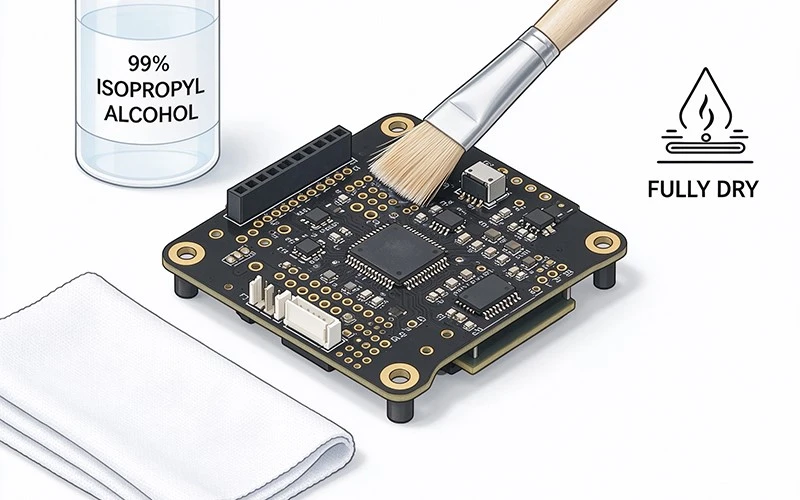
Clean the board with 99% isopropyl alcohol and let it dry completely - trapped alcohol under coating creates bubbles and voids. Apply two thin coats rather than one thick layer; thick coats skin over while solvent is trapped underneath, producing pinholes that defeat the purpose. Do not power up before the full cure time. Uncured silicone coating is slightly conductive when wet and can short a board on first power-up. After curing, do a ground range test and verify RSSI at 100 m; coating near antenna traces can slightly de-tune onboard receivers, and a 5 dB+ drop warrants thinning the coating over RF sections.
Coating is not a license to fly in snow or rain. It protects against splashes and wet grass; it does not make the quad submersible or rated for precipitation. If the aircraft is not IP-rated, active snowfall remains a no-go for most FPV builds.
The sealed-bag trick, refined. Before bringing a cold quad indoors, seal it in a large freezer bag and let it sit until it reaches room temperature. Any condensation forms on the bag, not the electronics. Dry off any snow or surface water before sealing - trapped liquid inside the bag defeats the purpose.
4. Structural Brittleness, Visual References, and Regulations
Cold makes carbon and plastics less forgiving
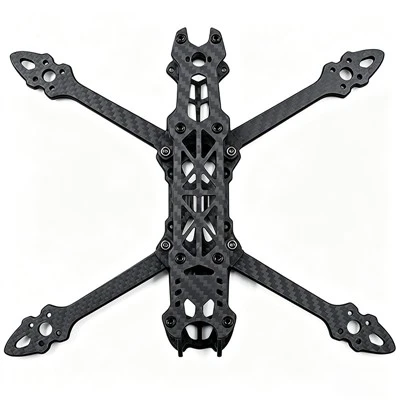
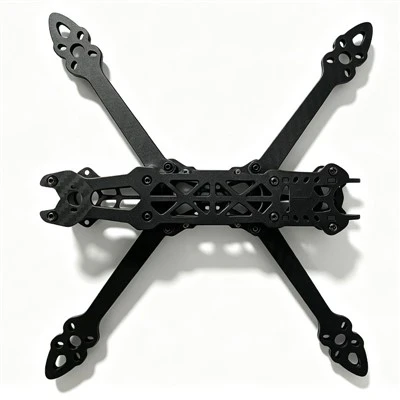
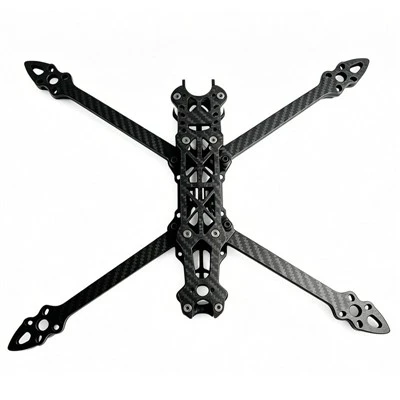
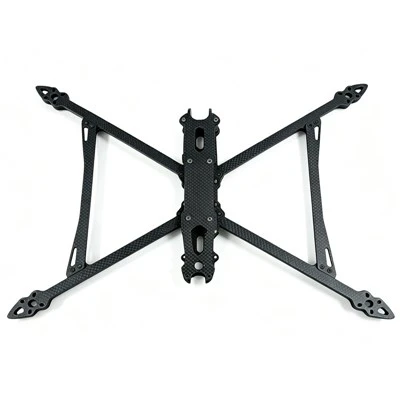
Sub-freezing temperatures stiffen the resin in carbon fiber laminates and embrittle printed plastics. A minor tumble that would survive in July can snap an arm or shatter a TPU camera mount in January. Polycarbonate props handle cold slightly better than acrylic blends but still fracture more easily; carry at least twice your normal spare prop count and inspect arms and mounts for cracks after any contact.
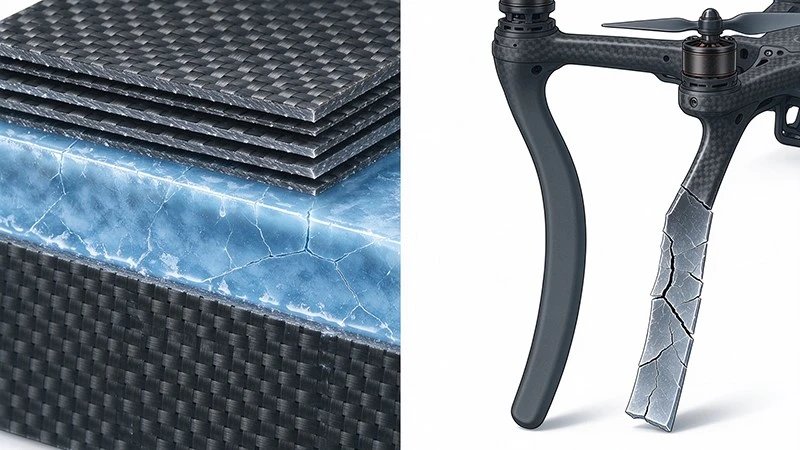
Snow destroys visual cues - and that affects both you and the aircraft
Smooth, bright snow removes texture and shadow. For aircraft that rely on downward visual positioning, reflective snow can impair navigation, and pilots are advised to exercise caution over smooth snow expanses wider than roughly 9 m (30 ft). For the FPV pilot, the bigger risk is "white-out": flying over snow-covered terrain with few or no contrast reference points, where orientation and altitude perception degrade even when flight visibility seems acceptable. Keep the aircraft closer, maintain visual line of sight, and do not push distance in flat white light.
Regulations and VLOS do not hibernate
Winter conditions do not suspend airspace rules. Always comply with local drone laws and regulations, and if conditions are abnormal, do not force the flight. VLOS must be maintained; fog, heavy snow, or white-out conditions that prevent proper visual line of sight are grounds to ground the flight, even if the drone has lights or onboard cameras. Cold-weather flight also changes energy calculations: wind at altitude and reduced battery performance can combine to make a return-to-home margin that worked in summer insufficient in winter.
RF behaves differently, in both directions
Cold, dry air generally supports good RF propagation for control links, but heavy snow and dense fog scatter 5.8 GHz video signals and reduce usable range. This is not a reason to stay home - it is a reason to shorten flights, keep a clear line of sight, and treat any moisture actively falling as a range limiter. Check goggle and radio battery voltage frequently; cold drains both faster than warm-weather sessions.
5. Pilot Readiness: Hands, Vision, and Field Discipline
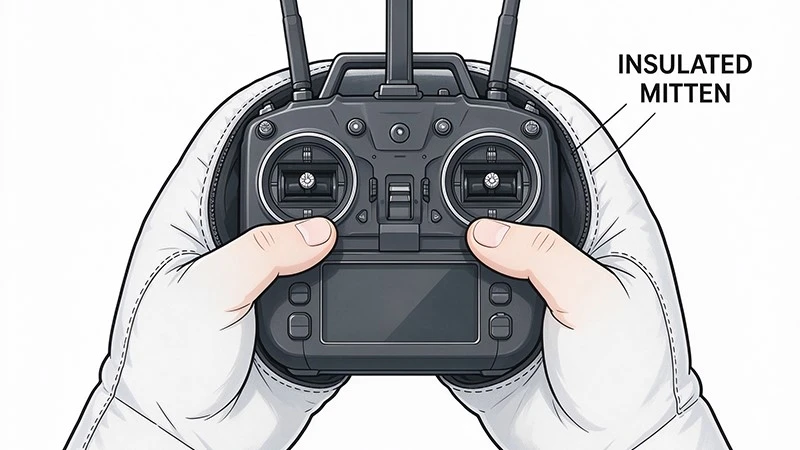
Numb fingers lose the fine motor control that FPV demands. A transmitter glove or muff enclosing both hands and the radio, with room for a chemical warmer inside, is the single most effective comfort intervention for sub-freezing sessions. Full-finger gloves under the muff extend usable time further. Keep anti-fog wipes and a microfiber cloth in the field kit; camera lenses fog when a cold quad is brought near a warm body or vehicle, and a fogged FPV camera lens mid-flight is a control problem, not just an image problem.
6. Winter Operations Checklist
| Phase | Action Item | Safety Note |
| Pre-flight | Clean the circuit board with 99% isopropyl alcohol; apply silicone conformal coating; mask the barometer, USB, buttons, SD card slot, and microphone hole. | Do not apply power before complete curing; perform ground distance testing after curing. |
| Battery prep | Preheat the LiPo to 15–27°C; check for swelling/cracks; confirm storage voltage 3.7–3.8 V/cell. | Do not charge below 0°C; allow to warm up for 30–60 minutes after flying before charging. |
| Transport | Insulated box + hand warmer (wrapped in a towel) or 12V heating bag; avoid direct heat sources. | The hand warmer does not directly contact the battery pack; do not use a hair dryer/heat gun. |
| Launch | Unlock immediately after power-on; do not wait for GPS on permafrost. | Increase the OSD minimum voltage warning for the first battery by 0.1–0.2 V/cell. |
| In-flight | Gentle cruise for the first 30 seconds; shorten the flight range; frequently check the voltage of the goggles/remote control. | 5.8 GHz range degradation in snow/fog; flight grounded in whiteout conditions |
| Landing | Landing at 3.5–3.7 V/cell, higher than the room temperature 3.3 V threshold | A sudden voltage drop in cold weather may trigger a loss of control before you can react. |
| Post-flight | Wipe off snow/water, and open the sealed bag only after it has returned to room temperature; charge the battery only after it has returned to room temperature. | Coating does not equal waterproof; non-IP rated aircraft do not fly in the snow. |
| Regulatory | Comply with local laws; maintain VLOS; do not fly forcefully. | Fog/heavy snow/whiteout obstructing VLOS means immediate grounding. |
Winter FPV is not a test of courage; it is a test of discipline around a few hard limits. Keep the LiPo above 0°C for charging and pre-heat it to 15–27°C before flight. Land at 3.5–3.7 V per cell, not at the summer threshold. Treat conformal coating as splash protection that requires careful masking, not as a waterproofing certificate. Respect snow's ability to erase visual references and respect the regulations that still apply in cold air. Do those things, and winter becomes a season of crisp footage and quiet flying fields rather than a season of swollen packs and shorted stacks.
FAQ
Q: Can I charge a LiPo that is still cold from the car or the field?
A: No. Charging a lithium pack below 0°C can cause lithium plating - metallic lithium deposits on the anode that permanently reduce capacity and can create an internal short. Allow a cold pack to return to room temperature naturally for 30–60 minutes before connecting a charger. Do not use a heat gun or hair dryer to speed this up; fast, uneven heating causes its own cell stress.
Q: How much flight time should I expect to lose in winter?
A: Plan for a 20–50% reduction, depending on temperature, pack age, and load. At 0°C, a LiPo delivers roughly 60–70% of its rated discharge capacity; at −10°C or below, usable capacity can fall toward 50% or lower. A pack that gives four minutes in summer is realistically a 2.5–3 minute pack in winter flying. Set your timer before takeoff, not after the first voltage warning.
Q: What landing voltage should I use in cold weather?
A: Land at 3.5–3.6 V per cell under load in winter, not the summer threshold of 3.3 V. Some guides recommend 3.6–3.7 V in extreme cold because cold packs recover less voltage after landing - a pack that reads 3.5 V on the ground may have been at 3.2 V under load, which is permanent-damage territory. Raise your OSD minimum voltage alert by 0.1–0.2 V per cell before the first pack.
Q: My battery "warms up in flight" - isn't that enough?
A: No. LiPos do warm from internal discharge, but the first 60 seconds of flight happen at cold temperature - exactly when punch-outs or aggressive throttle cause the worst voltage sag. The cold pack may trigger a low-voltage failsafe before it has any chance to self-warm. Pre-heat to 60–80°F (15–27°C) before takeoff, and treat the first 30 seconds as a gentle warm-up lap, not a performance window.
Q: Why is bringing my drone into a warm car more dangerous than flying in snow?
A: Condensation happens at the temperature transition, not during flight. When a cold-soaked quad meets warm, humid air inside a car or room, moisture condenses instantaneously on every surface, including flight controller pins, ESC surfaces, and VTX connectors. Water bridges adjacent pins and shorts electronics - and the failure may not appear until the next power-up. Flying in dry cold snow is often less risky than the act of bringing the aircraft indoors without protection.
Q: Does conformal coating make my drone safe to fly in snow?
A: No. Conformal coating protects against splash, wet grass, and light moisture; it does not make an unrated airframe waterproof or precipitation-rated. Active snowfall remains a no-go for most FPV builds without an IP rating. Coating is a second layer of defense behind the sealed-bag habit, not a substitute for it.